Neighborhood Guides
Feb 2, 20266 min read
Edina: Why the Premium Is Real
Yes, the 'Cake Eater' stereotype exists. But so does the bulletproof equity. Here is why Edina remains the blue-chip stock of Minnesota real estate.
Get the full picture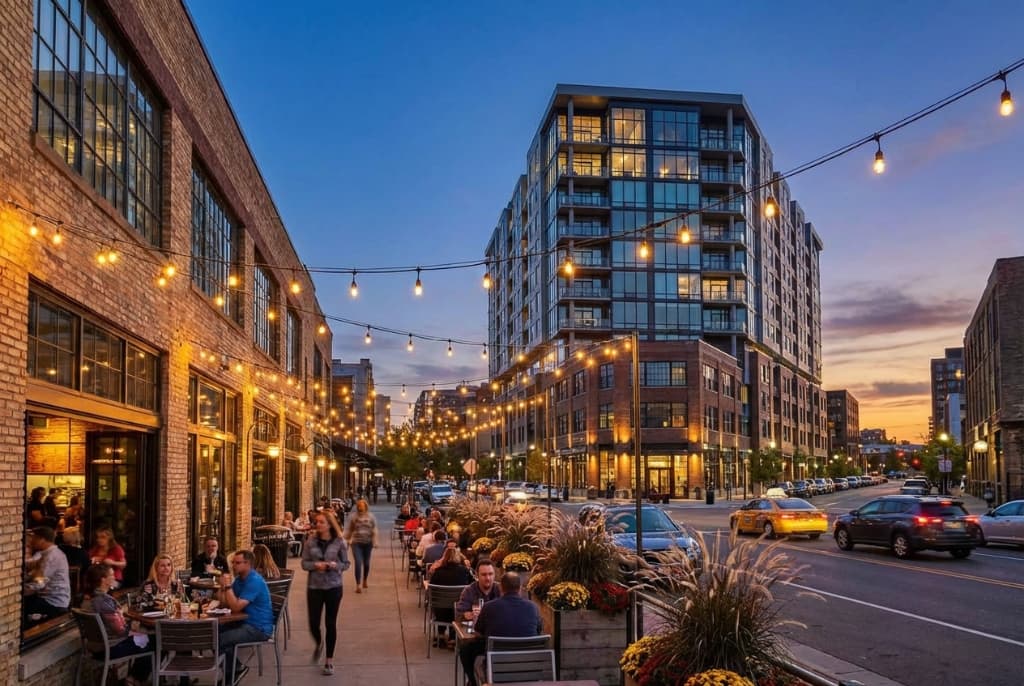
It's the most fashion-forward square mile in the Midwest. But is the energy actually livable? Here is the Real Talk on the Warehouse District.
If Minneapolis has a pulse, it's beating loudest in the North Loop.
A century ago, this was the farm implement capital of America. Look up at the old brick buildings and you'll still see the faded ghost signs from the 1880s — hand-painted ads for companies that don't exist anymore. Today? It's the best food scene in the Midwest, wrapped in some of the sharpest design you'll find anywhere.
That's a real transition. And it happened fast.
The real estate is defined by one word: character.
You aren't buying drywall boxes. You're buying timber beams, exposed brick that has absorbed a century of history, and floor-to-ceiling glass that frames the skyline. Alongside the historic conversions, new towers like the Four Seasons residences are pushing the ceiling of what a Minneapolis condo can cost — and what it can deliver.
Here's what the market actually looks like:
| Property Type | Price Range | Avg. $/SqFt | DOM | |--------------|-------------|-------------|-----| | Historic Loft (1BR) | $275,000–$400,000 | $280–$350 | 35 | | Historic Loft (2BR) | $400,000–$650,000 | $300–$400 | 42 | | New Construction Condo (1BR) | $350,000–$500,000 | $380–$450 | 28 | | New Construction Condo (2BR) | $550,000–$850,000 | $400–$500 | 38 | | Four Seasons / Premium (2BR+) | $800,000–$1.5M+ | $550–$750 | 60+ |
The key insight: the building matters more than the unit. Two identically sized condos in different buildings can vary by one hundred thousand dollars based on HOA quality, building reputation, and amenity packages. I've watched buyers make fifty-thousand-dollar mistakes by comparing price per square foot without understanding what's happening at the building level. Don't do that.
Living here means your neighborhood restaurant is Spoon and Stable — Gavin Kaysen's James Beard spot. Your gym is a specialized local studio. Your dog park doubles as a social scene.
A few places worth knowing:
Here's why this matters for real estate: when your barista at Spyhouse knows your order and your neighbor is a startup founder, you're not just living in a zip code. You're plugged into something. For professionals in their thirties and forties, that proximity to the city's creative and business energy is worth every dollar of the premium. (Whether it's worth it to you specifically is the question I'll help you answer.)
It's loud. Between the trains, Twins games at Target Field, and the nightlife crowd, you're not moving here for peace and quiet. You're moving here for the buzz. If you need silence to sleep, look at river-facing units or head to the suburbs. If you feed off energy, there's nowhere else like it in this market.
HOA fees are real money. Historic buildings run four hundred to seven hundred dollars a month. New construction can hit six hundred to nine hundred or more. That covers heated parking, building maintenance, and amenities — but it needs to be factored into your total monthly cost. A four-hundred-thousand-dollar loft with a six-hundred-dollar HOA carries the same monthly cost as a four-hundred-eighty-thousand-dollar single-family home with no association. Run the full number before you fall in love with the address.
Parking is a blood sport. If your unit doesn't come with a dedicated spot, budget one hundred fifty to two hundred fifty dollars a month for a nearby ramp. In January, with a fifteen-below wind chill, that number feels different than it does in July. Plan accordingly.
The appreciation curve is different here. North Loop condos appreciate more like urban markets — three to five percent annually — than suburban single-family homes, which run four to seven. You're paying for lifestyle, not aggressive equity growth. The exception: well-renovated historic lofts in smaller, character-rich buildings, which have outpaced the broader market by one to two percent annually. Know what you're buying.
Not all North Loop buildings are created equal. After selling here for decades, here's what I actually know:
The Heritage Buildings — Carlyle, Itasca, Lofts at 112 — give you timber beams, exposed brick, authentic warehouse character. Buyers either love the aesthetic or hate the quirks: uneven floors, limited storage, street noise. These hold value because they can't be replicated.
The Mid-Rise Conversions — Bookman Stacks, Rand Tower — step up in finish quality while keeping the character. These tend to have the best price-to-quality ratio in the neighborhood right now.
The New Towers — Four Seasons, 222 Hennepin — are full-service. Concierge, fitness centers, rooftop pools. You pay a premium, but the package is complete. These attract executives and buyers seeking full-service living who want everything handled.
The value moves: smaller, less-known conversions on the edges of the neighborhood, near Seventh Street or west of Washington. Less glamorous addresses. Significantly lower entry points. Room to appreciate as the neighborhood expands. This is where I'd look if I were buying for growth.
This is a twenty-four-seven neighborhood. If you want birds in the morning, I'll point you toward Bryn Mawr or Linden Hills. If you want to walk to dinner, walk to the gym, walk to work, and not start your car until February — this is it.
Buyers seeking low-maintenance living trade the lawn mower for a rooftop pool and building staff who know their name. The North Loop is the Twin Cities' answer to Tribeca, at a fraction of the price. That trade makes sense for a lot of people I know.
Investors: studio and one-bedroom units rent in five to ten days at sixteen hundred to twenty-two hundred dollars a month. Cap rates are modest — three to four percent — but appreciation is solid and vacancy is nearly nonexistent. This is a market you can underwrite with confidence.
If school access matters to you, the math gets harder. There's no neighborhood elementary school, and the urban environment isn't built around that priority. Worth knowing before you fall in love with a unit.
Send me a text and tell me what you're trying to solve. I'll tell you whether this neighborhood solves it.
(612) 310-1092
What is the average condo price in the North Loop, Minneapolis? As of twenty twenty-six, studio and one-bedroom lofts start around two hundred seventy-five thousand to four hundred thousand dollars. Two-bedroom units range from four hundred thousand to eight hundred fifty thousand depending on building quality and finishes. Premium units in buildings like the Four Seasons can exceed one-point-five million.
Is the North Loop a good neighborhood for investment properties? Yes, particularly for studio and one-bedroom rentals. Units typically rent within five to ten days at sixteen hundred to twenty-two hundred dollars a month. Cap rates run three to four percent, with strong appreciation potential and very low vacancy rates.
Are HOA fees high in the North Loop? Yes. Historic buildings run four hundred to seven hundred dollars a month; new construction can exceed nine hundred. These cover heated parking, building maintenance, and amenities. Always factor HOA fees into your total monthly cost when comparing to single-family homes — the numbers look different when you do.
📊 Related Tools & Resources
Market data sourced from NorthstarMLS via InfoSparks.
See the Neighborhood

Chris Deutsch
25 years of walking neighborhoods, checking basements, and telling clients the truth — even when it costs a commission. Minneapolis real estate, unscripted.
No sales pitches here. Just some honest tools, real data, and practical guides to help you figure out the next steps.
Based on information from the REGIONAL MULTIPLE LISTING SERVICE OF MINNESOTA, INC. as most recently published. Chris Deutsch, Lakes Area Realty, MN license 20382264.