Neighborhood Guides
Feb 2, 20266 min read
Edina: Why the Premium Is Real
Yes, the 'Cake Eater' stereotype exists. But so does the bulletproof equity. Here is why Edina remains the blue-chip stock of Minnesota real estate.
Get the full picture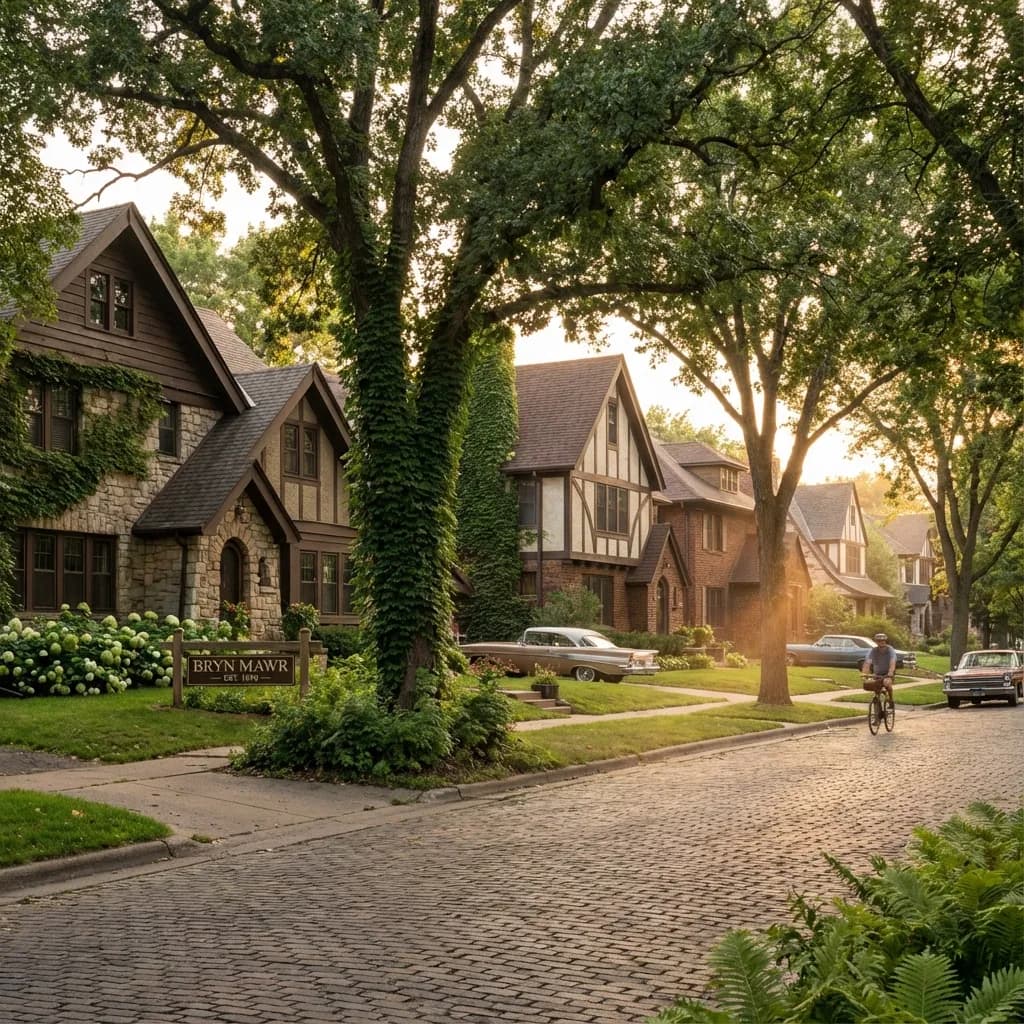
It doesn't have the fame of Edina, but the data shows it's retaining value better than almost anywhere else.
It doesn't have the fame of Edina or the energy of the North Loop. The residents prefer it that way.
Look at the data and Bryn Mawr is outperforming almost every other inner-ring neighborhood in Minneapolis. Median prices are holding at four hundred sixty-two thousand dollars. Homes sell in forty-seven days — not a frenzy, but they hold value better than the headline zip codes. And the people who live here aren't in a hurry to leave.
Bryn Mawr sits in a pocket that doesn't exist anywhere else in the city: Theodore Wirth to the north, Bassett Creek to the south, Bryn Mawr Meadows to the west, and the highway as the eastern wall. Four minutes from downtown. An island of calm that happens to be surrounded by one of the best trail systems in the state.
Here's what that geography actually does for home values: the only reason to drive into Bryn Mawr is because you live there — or you're visiting someone who does. There's no cut-through traffic. No bar crowd at midnight. No transient rental churn. The neighborhood self-selects for people who want to be there, and those people tend to stay.
In twenty-five years of watching Minneapolis neighborhoods appreciate, the ones that hold value long-term share one thing: they're hard to pass through. Bryn Mawr has that in its bones.
That isolation creates something rare in city real estate: genuine community. People know their neighbors. Bryn Mawr Elementary is walkable from anywhere in the neighborhood. The block parties are actually good. The neighborhood association is one of the most active in the city, and it shows in how the streets look and how the park space is maintained.
The renovation of Bryn Mawr Meadows Park is nearing completion — new athletic fields, native landscape trails, and a direct connection to the Luce Line trail. The city poured millions into this.
Buy where the city is investing. That's not a complicated rule, but most buyers don't think about it until after the fact.
Major park renovations within walking distance typically create a three to five percent value increase over three years. On a four-hundred-sixty-two-thousand-dollar home, that's fourteen thousand to twenty-three thousand dollars — not from speculation, not from flipping, just from the city making your neighborhood better while you're living in it.
The housing stock here is honest. You know what you're getting.
The bread and butter is nineteen forties through nineteen sixties ramblers and split-levels — solid construction, mature trees, lot sizes running a tenth to a quarter of an acre. These trade in the three-eighty to four-eighty range. When someone puts a hundred thousand into one of them — new kitchen, finished lower level, better windows — they're creating a five-fifty-plus product that moves in two weeks. The margin is there because demand consistently exceeds supply.
Newer infill comes up occasionally, priced six hundred to seven-fifty, and moves fast when it does.
The pattern worth understanding: Bryn Mawr doesn't overcorrect in down markets. During the twenty twenty-two rate shock, neighborhoods like North Loop and Uptown saw eight to twelve percent price dips. Bryn Mawr moved two to three percent. The buyers here aren't speculating. They're settling in. And they don't sell unless life forces them to.
Cuppa Java is the unofficial town hall. Walk in on a Saturday morning and you'll immediately understand what kind of neighborhood this is — the kind where people know each other's names and stay longer than they planned. If you're considering Bryn Mawr and haven't been in there on a weekend morning, go before you look at a single listing.
The trail access is genuinely outstanding. The Luce Line, Bassett Creek, and Wirth trail systems are all within walking distance. You can bike from Bryn Mawr to Cedar Lake on a dedicated trail in ten minutes. For a neighborhood that doesn't market itself as an outdoor destination, it quietly delivers one of the best trail connections in the city.
Bryn Mawr is for buyers who want a yard, mature trees, and quiet streets without surrendering a forty-five-minute commute. For buyers who value stability over velocity — it won't double in three years, but it won't drop fifteen percent either. For buyers who want a walkable neighborhood school right in the community. For investors looking for rental stability over speculation.
It's not the right fit if you want walkable restaurants and nightlife on your block — you'll drive five minutes for dinner, and that's the trade. It's not a flip play. Inventory is too tight and the neighborhood resists overdevelopment. And the closest light rail is a drive, not a walk.
Bryn Mawr doesn't advertise itself. The people who know, know. And the people who live there intend to stay.
If you want a home that holds its value, a neighborhood that functions like a real community, and a location that's absurdly close to downtown for the price — this is it. Inventory here is notoriously low. When something comes up, the window is short.
Send me a text and I'll set up a Bryn Mawr alert before anything hits the public portals.
(612) 310-1092
What is the median home price in Bryn Mawr, Minneapolis? As of twenty twenty-six, the median home price in Bryn Mawr is approximately four hundred sixty-two thousand dollars. Renovated homes and newer builds can reach six hundred thousand to seven hundred fifty thousand.
Is Bryn Mawr a good neighborhood for settling in? Yes. Bryn Mawr has its own elementary school, abundant park space including Theodore Wirth and Bryn Mawr Meadows, very low through-traffic, and one of the most active neighborhood associations in the city. It's consistently one of Minneapolis's strongest residential neighborhoods — and one of the quieter ones.
How fast do homes sell in Bryn Mawr? Average days on market runs around forty-seven. That's slower than hotspot neighborhoods, but it reflects stability — sellers here don't need to rush, and buyers don't lowball. Properly priced, well-prepared homes move considerably faster.
📊 Related Tools & Resources
Market data sourced from NorthstarMLS via InfoSparks.
See the Neighborhood

Chris Deutsch
25 years of walking neighborhoods, checking basements, and telling clients the truth — even when it costs a commission. Minneapolis real estate, unscripted.
No sales pitches here. Just some honest tools, real data, and practical guides to help you figure out the next steps.
Based on information from the REGIONAL MULTIPLE LISTING SERVICE OF MINNESOTA, INC. as most recently published. Chris Deutsch, Lakes Area Realty, MN license 20382264.