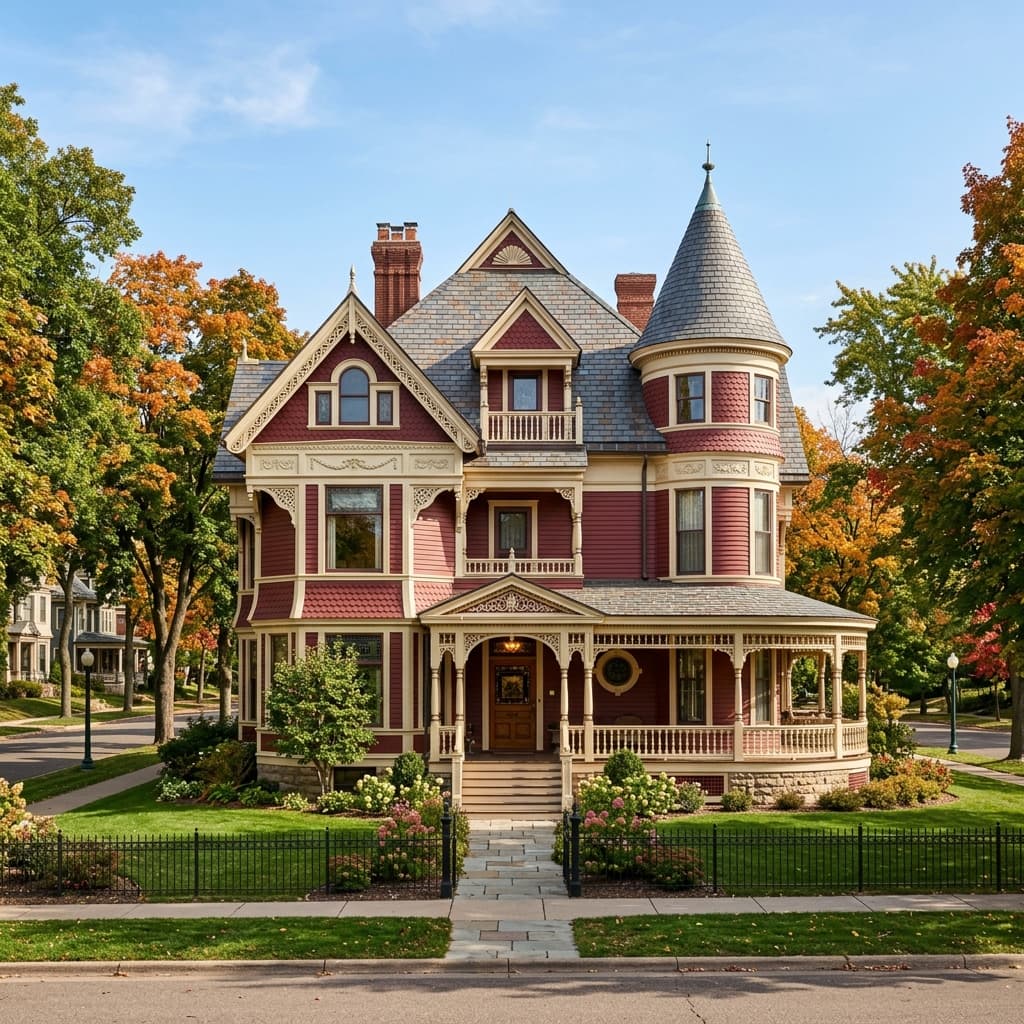
Going smaller doesn't mean giving something up. After 25 years in real estate, I've seen the patterns clearly. Here's the honest breakdown.
Here's the thing: the people who call me about the next move are almost never in a hurry. They've been thinking about it for two years. Sometimes three. The rooms outnumbered the people. The upstairs went quiet. They painted the guest room and realized nobody was coming to sleep in it.
They've done the math on square footage. They've toured a condo or two. They've had the conversation at dinner a dozen times.
They just haven't done it yet.
If that's you, I want to give you the most honest breakdown I can about what actually works in this market (and what I've watched people get wrong), so when you do move, you land well.
What Does a Successful Next Chapter Actually Look Like?
The people who handle this well do one thing consistently: they trade square footage, not quality. That's the core move.
Going from a 3,400-square-foot colonial in Minnetonka to a 1,600-square-foot condo in St. Louis Park isn't a downgrade. It's a completely different life, one where you don't spend a Saturday in April raking a yard that nobody plays in. One where the furnace issue is somebody else's problem. One where you're closer to things you actually want to be close to.
The mistake is treating the number of square feet as a proxy for quality of life. It isn't. I've been in 900-square-foot condos in Linden Hills where the kitchen finishes were nicer than anything in the $600,000 house I sold the same week.
What works:
- Moving to a product that fits how you actually live right now, not how you lived ten years ago
- Choosing a neighborhood where you'd want to spend a Tuesday afternoon, not just a weekend
- Going into the process knowing where you're landing before you list, not figuring that out while you're already in contract
What doesn't:
- Cutting too aggressively, going from 3,200 square feet to 900 is a lot to ask of yourself at once
- Moving to a suburb you've never spent time in because a friend moved there
- Listing the house first and then scrambling to figure out where you're going
That last one causes more problems than any other single mistake. I've seen it. The house sells fast, the sellers panic, and they end up in a place that was never quite right because the clock was already ticking.
What's the Financial Reality for Minneapolis Homeowners Planning a Move?
Most people who bought in Minneapolis or the western suburbs between 2000 and 2010 are carrying more equity than they realize. And a good chunk of that equity is sitting in square footage nobody's using.
I've watched sellers who bought a four-bedroom in St. Louis Park two decades ago walk away with real liquidity, even after closing costs.
That's not unusual. It's typical.
The equity is real. The number depends on your block, your payoff, and your timing. The Home Equity Calculator gives you a working figure for your situation.
The real point: the money is there. It isn't doing anything for you while it sits in rooms nobody uses. A well-planned move doesn't shrink your life; it converts a dormant asset into something that funds the next chapter.
When Is the Right Time to Make This Move?
The best time is when you choose it. The worst time is when something forces your hand.
That distinction is more important than the calendar.
I've worked with people who moved from choice, everything lined up, they had time to find the right place, they moved at their pace. Those transitions are almost uniformly good. And I've worked with people who waited for a crisis to make the decision for them. The move is easier when you choose the timing. Waiting hands the calendar to someone else.
Acting from choice means:
- You pick the neighborhood, the product type, the timing
- You don't have to take the first offer
- You have room to negotiate on the buy side too
- The whole process happens at a pace that feels manageable
Acting from necessity means:
- The market picks your timeline
- You take what's available
- Pressure compresses every decision
The people I sit with most often have been circling this for two years and are still in the original house. That's not a profile. That's a description of dozens of real conversations I've had at kitchen tables across this city.
The common thread: they all say they wish they'd started earlier. Not because the move itself was bad (most of them love where they landed) but because doing it under time pressure added stress that didn't need to be there.
If you're somewhere in that window, the Senior Living Transition guide has a useful breakdown of the twelve-to-eighteen-month timeline that the best transitions tend to follow.
What Kinds of Homes Fit This Move?
Not every home type is right for every person. Here's how I think about matching people to the right type of home based on what they actually want from the next chapter.
| Product Type | Best For | Neighborhoods | Price Range (2026) |
|-------------|----------|---------------|-------------------|
| One-level condo | Lock-and-leave lifestyle, no maintenance | St. Louis Park, Edina | $325,000–$525,000 |
| Townhome / villa | Extra space, small yard option, still manageable | Minnetonka, Plymouth, Edina | $375,000–$575,000 |
| Linden Hills bungalow (smaller) | Stay in a neighborhood feel, walkability | Linden Hills, Fulton | $400,000–$575,000 |
| Northeast loft / condo | Proximity to walkable dining, arts, a younger energy | Northeast Minneapolis | $275,000–$425,000 |
| One-level living community | Shared spaces, services, no stairs | Eden Prairie, Plymouth, Minnetonka | $225,000–$450,000 |
Northeast is not for everyone. It works beautifully for the person who wants walkability, doesn't need a yard, and has some tolerance for urban energy. I've placed a handful of people who wanted exactly that there, and they love it. I've also talked a few out of it when I realized their mental picture didn't match the actual neighborhood.
The one-levels in St. Louis Park and the villas in Edina are the most consistent performers for the typical buyer for this product: accessible, manageable, close to everything, and the resale market for them is strong.
What About the Part That Isn't About Square Footage?
I want to spend a minute on this, because it's the thing people feel most but talk about least.
Leaving a home you raised a family in is hard. Not in a way you need to talk yourself out of, just in a way that deserves to be acknowledged. I've sat across the table from a client who stopped mid-sentence because she was looking at the mark on the doorframe where her youngest had been measured at age six. We just sat with that for a minute.
That's real. It should be real. Nothing that happened inside those walls gets handed over at closing.
But here's what I've seen consistently: the people who make this move when they're ready (not rushed, not panicked) almost all look back and say some version of the same thing. That the new place has its own warmth. That they can actually afford to do things they couldn't while maintaining a big house. That they're less tired.
Leaving a home you've loved doesn't erase what happened there. It just means you built something real enough that you get to take it with you.
What's the First Step If I'm Seriously Thinking About This?
Start with the number. Not the emotional number, the financial one. Find out what your home is actually worth right now and how much equity you'd walk away with after closing costs. That number is the foundation of every other decision.
The Home Equity Calculator is a good starting point. Plug in your details and get a working estimate. Then we can sit down, look at the real comps in your neighborhood, and have an honest conversation about what your options actually are.
If you're closer to the senior living conversation (health considerations, timing around a spouse, the full logistics of that transition), the Senior Living service page covers the process from start to finish.
Either way, the best first step is just talking. Not committing. Not listing. Just getting the information you need to make a clear-eyed decision.
Send me a text and we'll grab coffee. Bring whatever questions have been sitting with you for the last two years.
Talk soon, Chris.
Related reading: